
Introduction
I remember stomping through a busy fabrication bay on a hot June morning, the air thick and the welders squinting like they were fighting off a summer sun (you could almost taste the metal). In the second breath I told my team about automotive manufacturing welding fume extraction numbers—33% of local shops reported visible smoke and odor beyond the booth—and I asked, plain and simple: how are we still letting this happen? Down-home truth: the gear’s there, but the results often ain’t. I want to lay out what I’ve seen, what the data says, and why you should care—then we’ll dig into the real problems. Let’s get to it and see where the fixes start.
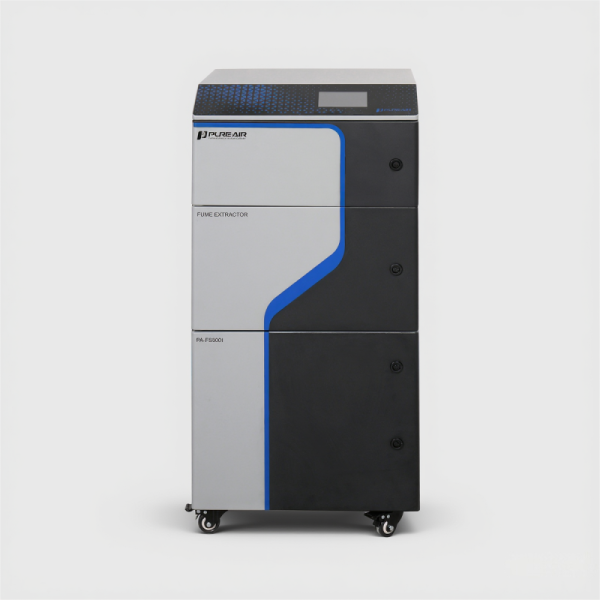
Where the Common Fixes Fail: A Close Look at Traditional Solutions
welding shop fume collectors are sold as the answer, but in my experience they’re often set up like band-aids on a gusher. Too many systems rely on a single point of capture or undersized fans, and the math gets ignored. Source capture only works if the hood, extraction arm, or downdraft table is positioned right and the airflow velocity is correct. Too little CFM (cubic feet per minute) and you just stir the plume; too much and you blow metal fumes into another worker’s breathing zone. I’ve walked through plants where HEPA filters were caked and bypassed; maintenance was a checkbox, not a habit. Look, it’s simpler than you think—fix the basics first.
Why aren’t these systems doing the job?
The short list: poor hood geometry, mismatched fan power, recirculation, and weak particulate monitoring. Hood geometry matters more than people give it credit for—small gaps wreck capture. Fans tied to undersized power converters run flat-out yet never deliver required static pressure. And when shops recirculate without proper multi-stage filtration (pre-filter + HEPA), they save energy but sacrifice health. I’ve seen extraction arms installed three feet away from the weld—practically decorative. Those mistakes stack. They create stray fumes, settle particulate on fixtures, and push operators to improvise—breathers off, or hoods pushed aside. That’s the human cost. We can do better, and frankly, we must.
Looking Forward: New Principles and Practical Choices
welding shop fume collectors are getting smarter, and I want to walk you through the principles that actually matter when you plan an upgrade. First: source-first design—place capture at the joint, not at the end of the bay. Second: layered filtration—use a coarse pre-filter, a finer stage, then HEPA for the smallest particulates. Third: sensor-driven control—particulate monitoring tied to variable-speed drives and edge computing nodes lets the system breathe with the process. These aren’t buzzwords. They cut runtime, improve capture efficiency, and reduce filter overload. I’ve run models with computational airflow analysis (CFD) that showed a 40% gain from simple hood tweaks—funny how that works, right?
What’s Next for Shops and Designers?
Think modular systems and smarter controls. Mobile extraction arms that move with robots; downdraft tables with zoned airflow; analytics that show when a filter is really loaded, not just on a calendar. Consider power converters sized to the fan curve (not just the motor rating) so you get the static pressure you need. Also—don’t ignore human factors. Ergonomics and access matter. If the system makes the welder work harder, they’ll bypass it. I recommend three hard metrics when choosing a system: 1) capture efficiency at the weld (measured in real conditions), 2) total cost of ownership including filter lifecycle and power, and 3) sensor-backed uptime and maintenance alerts. Use those, not shiny specs alone.

We’re at a practical crossroads. New tech—smart sensors, better filtration stages, and realistic airflow design—lets us fix old mistakes and protect people without breaking the bank. I’ve seen plants turn a chronic fume problem into a quiet, clean operation in months, not years. If you want a place to start, look for solutions that marry solid capture design with real-time monitoring and maintainability. For hands-on gear and real-world products that match these ideas, I keep coming back to reliable partners—people who build systems thoughtfully. Check out PURE-AIR when you’re ready to move from talk to action.